
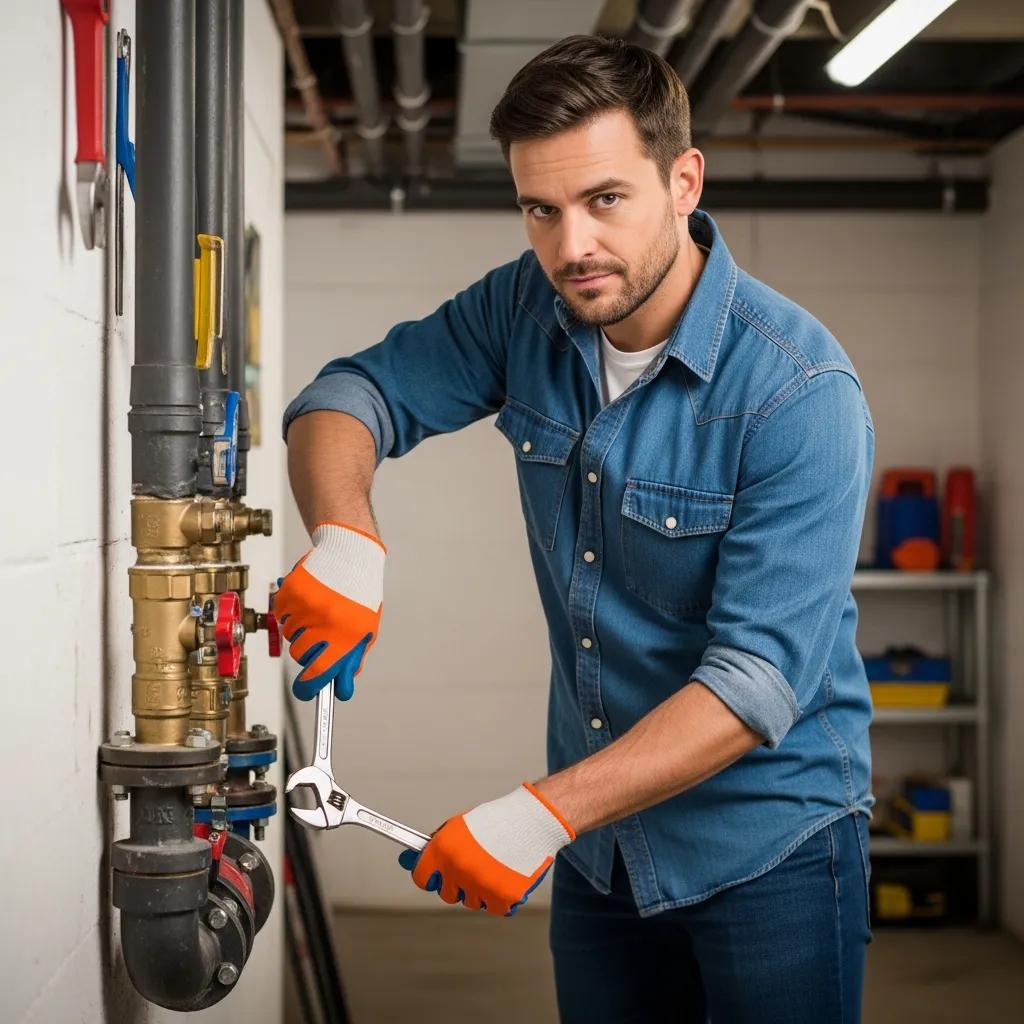
How to Shut Off Water to Your House — Emergency Guide for Homeowners to Find and Operate the Main Shutoff Valve
Knowing how to shut off the water to your home is a basic but crucial homeowner skill. In a burst pipe or sudden leak, finding and operating the main shutoff quickly can stop damage fast and save you from costly repairs. This guide walks you through where to look for the main valve, the common valve types you’ll see, safe shutoff steps, what to do after you turn the water off, and simple ways to reduce future plumbing emergencies.
How homeowners think about emergency readiness affects how well they cope with real incidents — and whether small issues turn into big headaches.
Homeowner Emergency Preparedness Practices
This study aimed to better understand homeowners’ experiences and views on household emergencies and preparedness. Researchers used a short survey and held three focus-group sessions with 16 homeowners from two metro-Atlanta homeowners’ associations.
Qualitative study of homeowners’ emergency preparedness: Experiences, perceptions, and practices, 2007
Where Is the Main Water Shut Off Valve Located in Your Home?
The main shutoff valve controls water to your whole house. Knowing where it lives ahead of time gives you a fast response when something goes wrong, and can limit water damage significantly.
How to Find Exterior and Interior Main Water Shutoff Valve Locations
Start by checking the places water lines usually enter a home. Most common locations include:
- Basement: Near the front foundation wall where the water service pipe comes into the house — often close to the street-facing side.
- Crawl Space: If you have a crawl space, the valve is usually low to the ground where the main line runs in.
- Garage: Look on the wall nearest the street; many homes route the service through the garage.
- Outside: Some homes put the shutoff near the water meter or mounted on an exterior wall in a weatherproof box.
If you can’t spot it right away, use a flashlight in dark areas and follow the largest pipe coming into the house — that’s your main water line.
What Is the Role of the Water Meter Shut Off Valve?
The valve at the water meter gives you an additional place to stop the supply, and it’s commonly used by utilities and homeowners for these reasons:
- Maintenance: Shut the meter valve when doing repairs or replacing fixtures without affecting the street feed.
- Emergencies: It provides a way to cut water quickly if the interior shutoff is hard to access.
- Utility Access: It allows utility workers to isolate and service the meter safely.
Knowing whether your meter has an accessible shutoff (and where it is) makes emergency response simpler.
What Are the Types of Main Water Shut Off Valves and How Do You Operate Them?
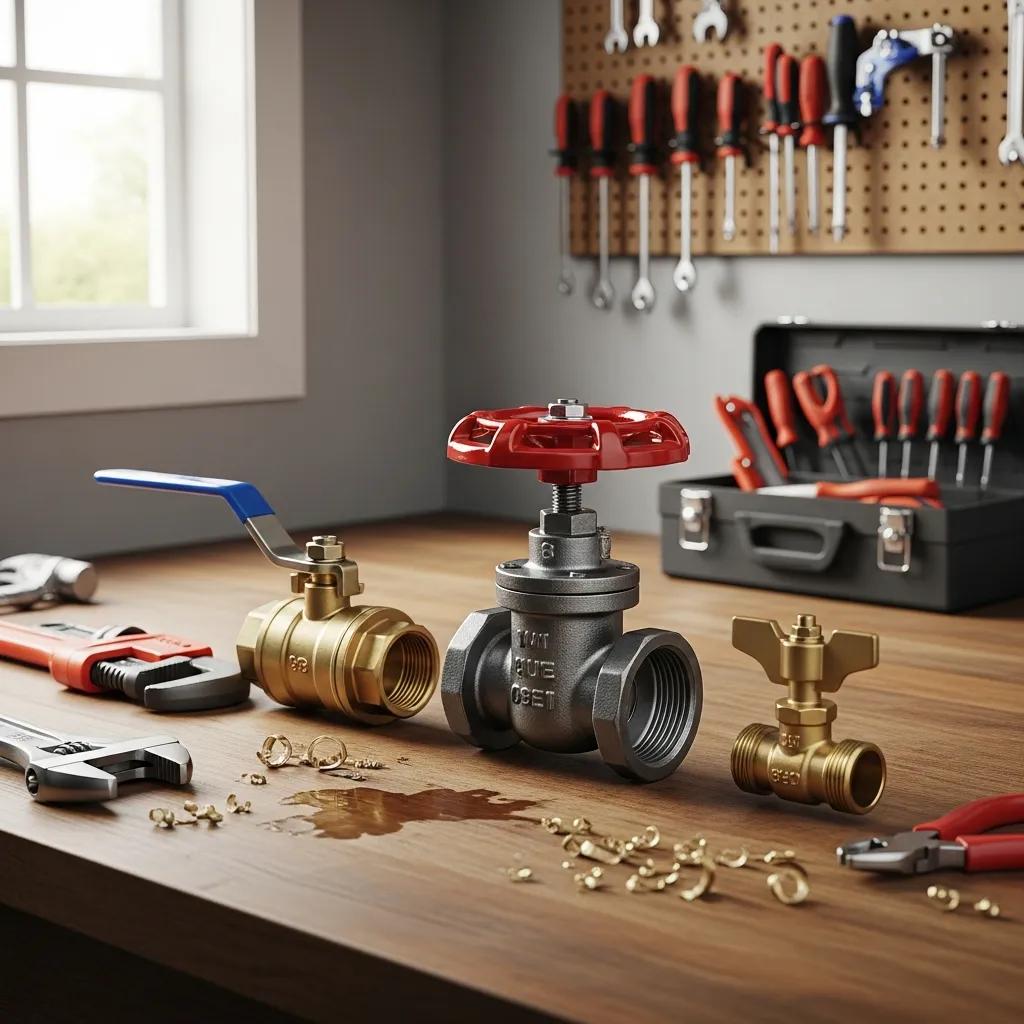
How to Identify and Use Ball Valves and Gate Valves
- Ball Valves: These have a short handle and a ball inside that stops flow. To operate: turn the handle a quarter turn clockwise to close; a quarter turn counterclockwise opens it. They’re quick and reliable.
- Gate Valves: These use a wheel that raises or lowers a gate. To operate: turn the wheel clockwise until it stops to close; turn counterclockwise to open. Expect several turns — they’re slower but common on older systems.
Remember: ball valves close with a 90° turn, while gate valves need multiple rotations to fully open or close.
What Are Stopcock and Other Common Valve Types?
- Stopcock: A compact valve with a round handle found near meters or inside older homes. Turn clockwise to close, counterclockwise to open.
- Other Common Valve Types:Compression valves — often in older fixtures — work by tightening the handle clockwise to stop flow and loosening counterclockwise to open. Lever valves have a flat lever you rotate 90° to move between open and closed.
Recognizing the valve type ahead of time helps you act quickly and avoid forcing the hardware.
What Is the Step-by-Step Emergency Water Shut Off Procedure for Your House?
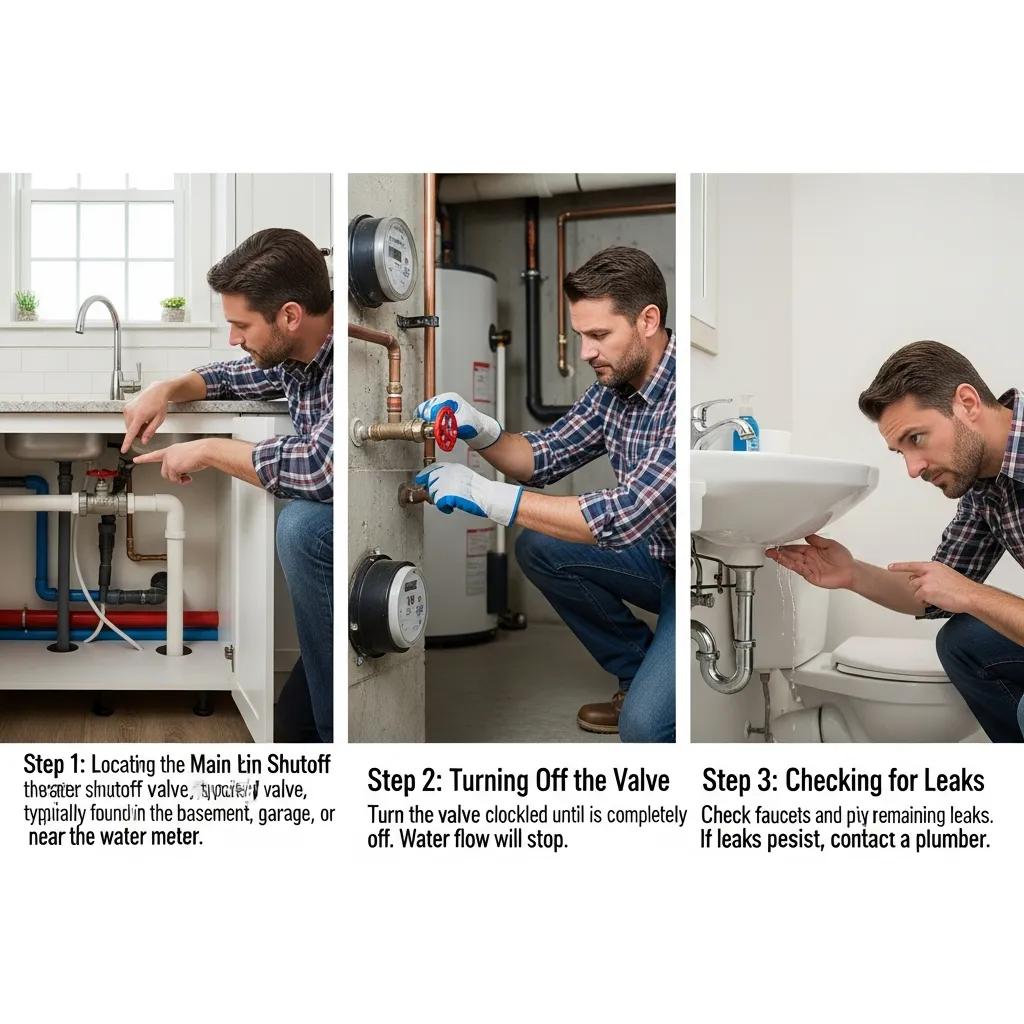
How to Shut Off Water to the Entire House Safely
- Locate the Main Shutoff Valve: Know where your main valve and any meter valve are before an emergency.
- Turn Off the Valve: Use the correct motion for your valve type (quarter turn for ball valves; multiple turns for gate valves; clockwise to close for stopcocks).
- Check for Leaks: Once off, scan visible pipes, fixtures, and the valve itself for continued drips or pooling.
- Drain the System: Open faucets and flush toilets to relieve pressure and clear water from the lines.
How to Shut Off Water to Individual Fixtures Like Toilets and Water Heaters
- Identify the Fixture Shutoff Valve: Most toilets, sinks, and appliances have a nearby shutoff — usually a small valve on the supply line.
- Turn Off the Valve: Turn the fixture valve clockwise to close (righty-tighty).
- Flush Toilets: After closing a toilet’s valve, flush to empty the tank.
- Turn Off Water Heater Power: If you’re isolating a water heater, switch off gas at the supply valve for gas units or flip the heater’s breaker for electric models before doing work.
How Should Homeowners Respond After Shutting Off the Water in an Emergency?
What Are the Next Steps: Draining Pipes and Turning Off Water Heater Power?
- Drain the Pipes: Open cold and hot faucets on lower and upper floors to let remaining water clear the system.
- Turn Off Water Heater Power: For gas heaters shut the gas; for electric models, turn off the breaker to avoid damage if the tank runs dry.
- Check for Damage: Walk through the house looking for soaked drywall, warped flooring, stains, or active leaks.
These steps reduce the chance of secondary damage and keep you safe while you assess repairs.
When and How to Contact a Professional Plumber for Emergency Assistance
- There’s significant water damage visible.
- You can’t find or operate the main shutoff valve.
- The leak continues after shutting off the water or you’re unsure how to proceed safely.
Ask friends or neighbors for recommendations or search local reviews to find a reputable emergency plumber — and keep their contact info handy.
How Can Preventative Measures and Smart Technologies Help Avoid Plumbing Emergencies?
What Are the Benefits of Regular Valve Testing and Maintenance?
Keeping valves and plumbing checked routinely catches small problems before they grow. Benefits include:
- Early Detection: Spotting leaks or stiff valves early avoids bigger repairs later.
- Longer Lifespan: Routine care helps valves and fixtures perform longer and more reliably.
- Less Worry: Regular checks give you confidence that your plumbing will behave in an emergency.
How Do Smart Leak Detectors and Automatic Shutoff Systems Work?
- Detecting Leaks: Smart sensors monitor moisture and send instant alerts to your phone when they sense water where it shouldn’t be.
- Automatic Shutoff: Integrated systems can close the main valve automatically if a major leak is detected, stopping damage while you respond.
Investing in sensors or an automatic shutoff adds a layer of protection and can prevent a small leak from becoming a disaster.
| Valve Type | Description | Operation Method |
|---|---|---|
| Ball Valve | A valve with a spherical disc that controls flow | Quarter turn to open/close |
| Gate Valve | A valve that uses a gate to control flow | Multiple turns to open/close |
| Stopcock | A valve used to control water flow | Turn clockwise to close, counterclockwise to open |
Knowing how to shut off your home’s water is a simple, high-impact skill every homeowner should have. Learn where your valves are, practice operating them, and consider basic preventive steps like periodic checks or smart leak devices — they save time, money, and stress when something goes wrong.