
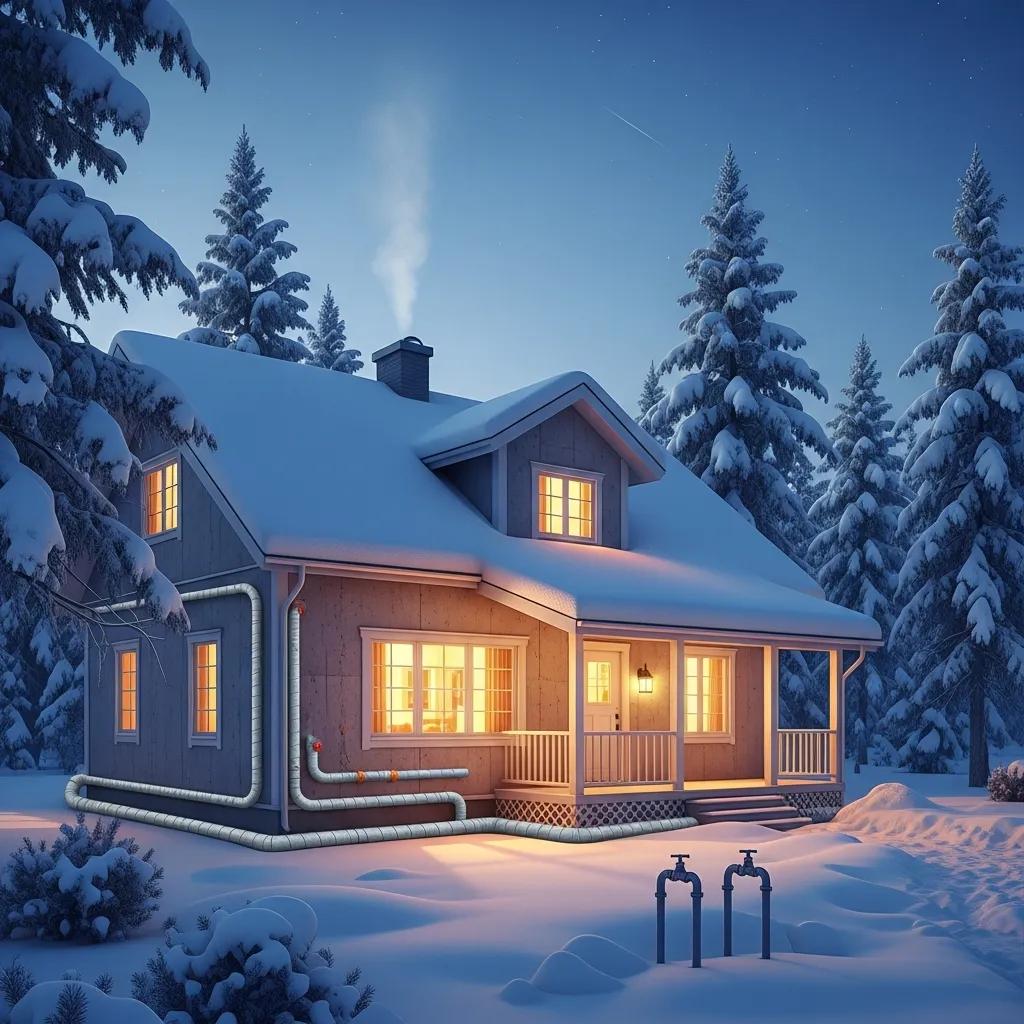
How to Prevent Frozen Pipes in Winter: Essential Tips for Homeowners to Protect Plumbing
As winter approaches, homeowners face the risk of frozen pipes, which can lead to significant damage and costly repairs. Understanding how to prevent this issue is crucial for maintaining a safe and functional home. This article will provide essential tips on how to winterize plumbing effectively, ensuring that your pipes remain intact during the cold months. We will explore the causes of frozen pipes, the best prevention methods, and how to create a winter plumbing checklist. Additionally, we will discuss safe thawing techniques and the costs associated with frozen pipe repairs. By following these guidelines, homeowners can protect their plumbing systems and avoid the headaches that come with frozen pipes.
Research consistently highlights the importance of comprehensive home winterization strategies for residential properties.
Residential Home Winterization Strategies Report
This report by the four UW-Madison researchers indicates that home winterization, as a method proposed in Abt, 1975; Ruegg, 1975; and Peterson, 1973, is most appropriate for residential applications.
Home Winterization (A Technical Report), 1975
What Causes Pipes to Freeze and Which Areas Are Most Vulnerable?
Frozen pipes occur when the temperature of the water inside the pipes drops below freezing, causing the water to expand and potentially burst the pipes. Understanding the factors that contribute to this issue is essential for prevention. Cold weather can severely impact plumbing systems, especially in areas that are not adequately insulated.
How Does Cold Weather Affect Home Plumbing Systems?
Cold weather affects plumbing systems by lowering the temperature of the water within the pipes. When temperatures drop to 32°F (0°C) or below, the water can freeze, leading to blockages and increased pressure within the pipes. This pressure can cause pipes to crack or burst, resulting in significant water damage and costly repairs.
Further studies delve into the specific mechanisms of pipe failure, particularly in common residential materials.
Studying Freezing Failures in Residential PVC and CPVC Pipes
The freezing failures are studied by replicating pipe freezing in both PVC and CPVC pipes. Pressure and temperature during the freezing process are monitored to determine the conditions that lead to a freeze failure for a CPVC pipe in a residential setting.
A study of the freezing Phenomena in PVC and CPVC Pipe Systems, 2010
Which Home Areas Are Prone to Pipe Freezing?
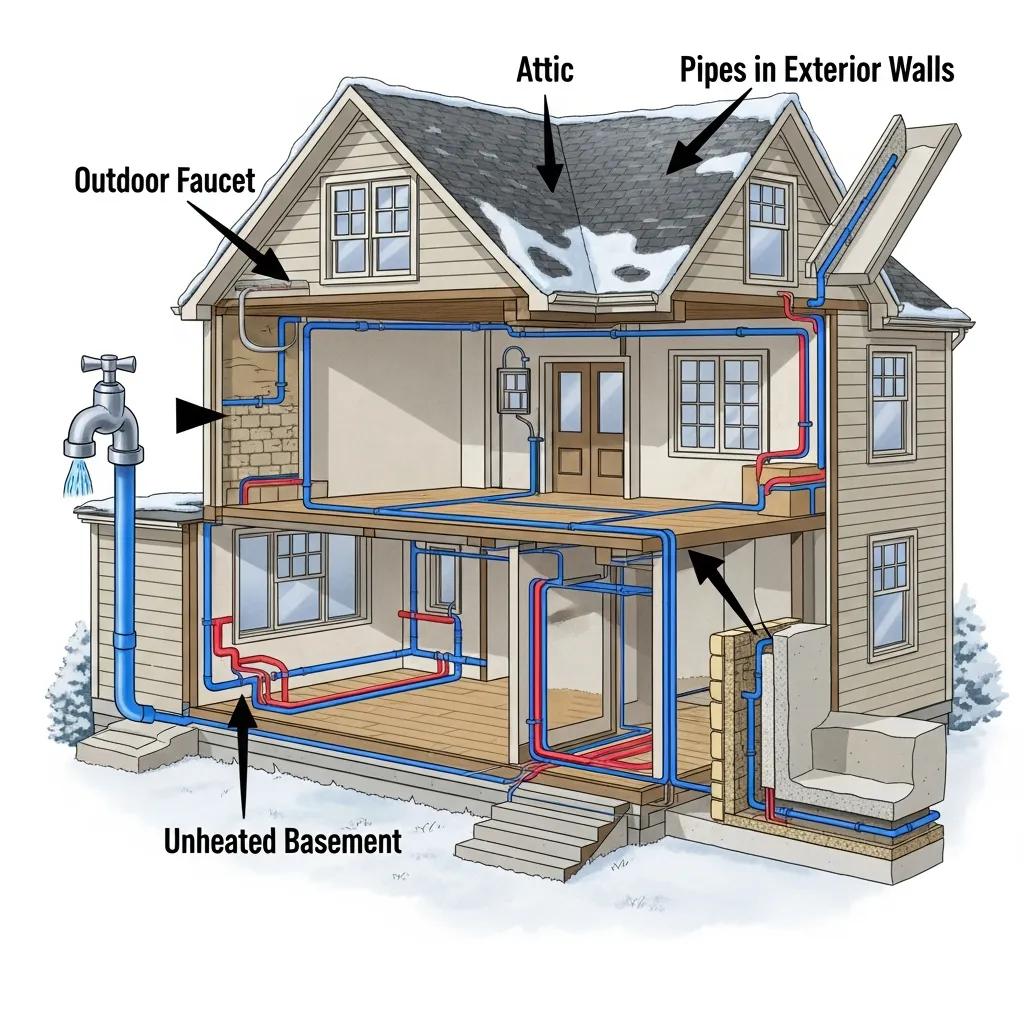
Certain areas of the home are more susceptible to pipe freezing. These include:
- Outdoor pipes and faucets: Exposed to the elements, these pipes are at high risk of freezing.
- Unheated spaces: Areas like basements, crawl spaces, attics, and garages often lack adequate heating, making them vulnerable to freezing temperatures.
- Interior walls: Pipes running through exterior walls may not receive enough heat, increasing the risk of freezing.
By identifying these vulnerable areas, homeowners can take proactive measures to protect their plumbing systems.
What Are the Best Methods to Prevent Pipes from Freezing This Winter?
Preventing frozen pipes requires a combination of insulation, monitoring, and proactive measures. Here are some effective methods to keep your pipes safe during winter:
- Insulate Pipes: Use pipe insulation or heat tape to cover exposed pipes, especially those in unheated areas. This helps maintain a higher temperature within the pipes.
- Drip Faucets: Allowing faucets to drip slightly can prevent pressure buildup and reduce the chances of freezing.
- Seal Air Leaks: Inspect your home for drafts and seal any gaps around windows, doors, and walls to keep cold air from reaching your pipes.
For homeowners looking for additional resources, Information Hub provides valuable insights and connections to reputable plumbing services that can assist with winterization efforts.
How to Use Pipe Insulation and Heat Tape Effectively?
To effectively use pipe insulation, homeowners should:
- Choose the right type of insulation material, such as foam or fiberglass, based on the pipe’s location.
- Ensure that the insulation fits snugly around the pipes, covering all exposed areas.
- For heat tape, follow the manufacturer’s instructions for installation, ensuring it is applied evenly along the length of the pipe and not overlapped.
Specific materials like polyethylene foam are recognized for their effectiveness in providing frost protection for residential pipes.
Polyethylene Foam for Residential Pipe Frost Protection
Polyethylene foams are closed-cell insulation materials that are being developed to enhance the thermal performance of walls and roofs. It is generally used for pipe insulation for frost protection in residential buildings.
A Comparative performance analysis of different insulation materials installed in a residential building of a cold region in Pakistan, A Iqbal, 2022
Why Should You Drip Faucets and Seal Air Leaks?
Dripping faucets can help prevent freezing by allowing water to flow, which reduces pressure buildup. Additionally, sealing air leaks is crucial because it prevents cold air from entering the home and reaching the pipes. By addressing these two factors, homeowners can significantly reduce the risk of frozen pipes.
How to Create and Use a Winterize Home Plumbing Checklist?
Creating a winterization checklist can help homeowners systematically prepare their plumbing for winter. This checklist should include essential tasks to ensure all plumbing systems are protected.
What Steps Should Homeowners Include in Their Winter Plumbing Checklist?
Homeowners should consider the following steps for their winter plumbing checklist:
- Disconnect and drain outdoor hoses and faucets.
- Insulate pipes in unheated areas.
- Check the water shut-off valve for proper function.
- Ensure that the heating system is working efficiently.
How to Protect Outdoor Faucets and Sprinkler Systems?
To protect outdoor faucets and sprinkler systems, homeowners should:
- Drain and store hoses properly.
- Use insulated faucet covers to protect outdoor faucets.
- Winterize sprinkler systems by draining water and shutting off the water supply.
How Can You Safely Thaw Frozen Pipes Without Causing Damage?
If pipes do freeze, it is essential to thaw them safely to avoid further damage.
What Are Safe Thawing Techniques for Frozen Pipes?
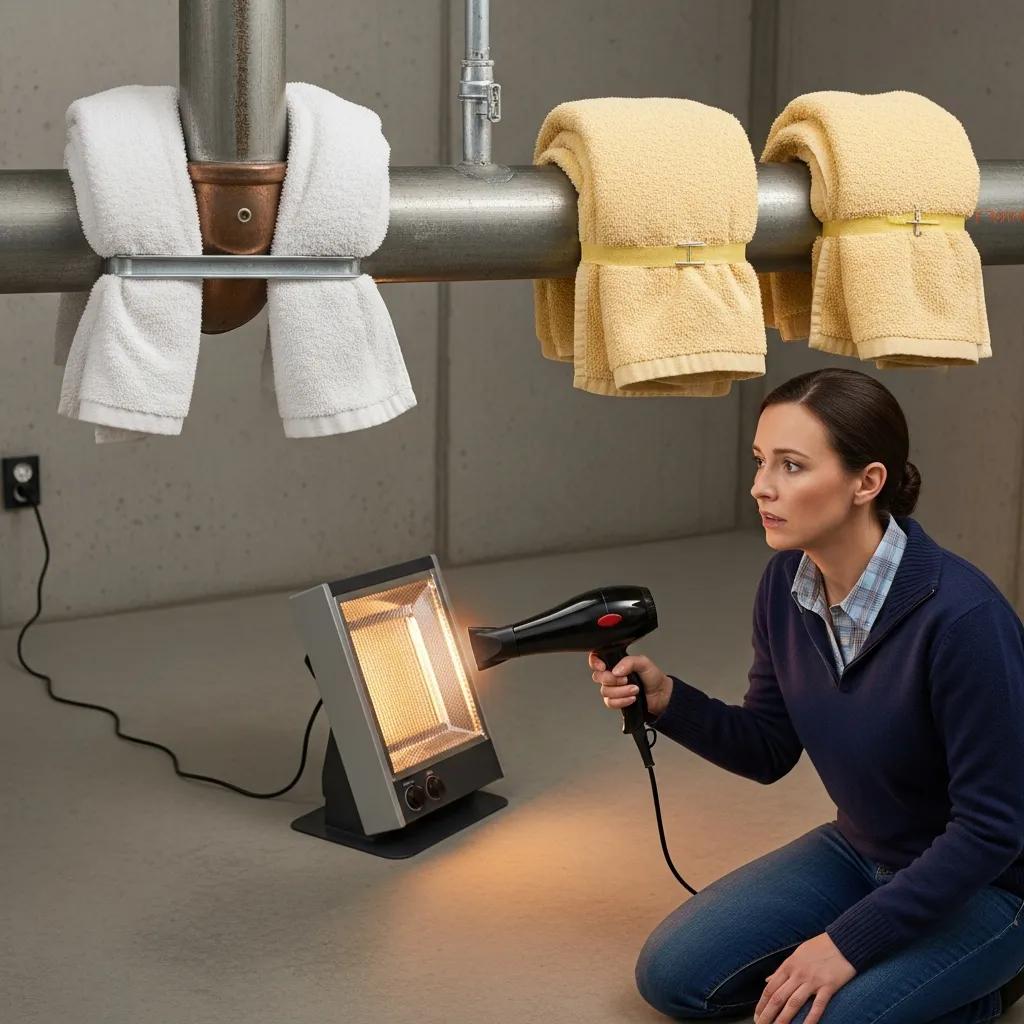
Safe thawing techniques include:
- Using a hair dryer: Apply heat gradually to the frozen section of the pipe.
- Warm towels: Soak towels in hot water and wrap them around the frozen pipe to gently warm it.
- Space heaters or heat lamps: Use cautiously in the area near the frozen pipe to raise the temperature.
Which Methods Should Be Avoided to Prevent Pipe Damage?
Homeowners should avoid using open flames, such as a blowtorch or candles, or boiling water to thaw frozen pipes, as these methods can cause the pipes to crack or burst due to rapid temperature changes or fire hazards.
What Are the Typical Costs and Insurance Considerations for Frozen Pipe Repairs?
Understanding the costs associated with frozen pipe repairs can help homeowners prepare financially for potential issues.
How Much Does It Cost to Repair Frozen or Burst Pipes?
The average cost to repair frozen or burst pipes typically ranges from $250 to $1,500, depending on the extent of the damage and the location of the pipes. Factors affecting costs include:
- The type of pipe material.
- The location of the damage.
- The urgency and complexity of the repair.
Does Homeowners Insurance Cover Frozen Pipe Damage?
Many standard homeowners insurance policies cover sudden and accidental water damage caused by burst pipes, but they usually do not cover damage resulting from neglect or lack of maintenance. Coverage can vary, so homeowners should review their policies carefully and consider additional coverage if necessary.
When and How Should Homeowners Contact a Professional Plumber for Winter Plumbing Issues?
Knowing when to seek professional help is crucial for addressing plumbing issues effectively.
What Are Signs That Require Professional Plumbing Assistance?
Homeowners should contact a plumber if they notice:
- Unusual water flow or pressure changes.
- Visible leaks or water damage.
- Frozen pipes that do not thaw with safe methods.
- Signs of pipe damage or suspected leaks.
How to Choose a Reputable Plumber for Winter Services?
When selecting a plumber, homeowners should:
- Check credentials and licenses.
- Read reviews and ask for recommendations.
- Ensure the plumber has experience with winter plumbing issues.
By following these guidelines, homeowners can effectively prevent frozen pipes and protect their plumbing systems during the winter months.